OCOP training strengthens skills across Tajikistan’s apricot value chain

The event brought together 75 participants, who strengthened their knowledge and practical skills in climate-resilient apricot production, efficient water use and post-harvest quality management.
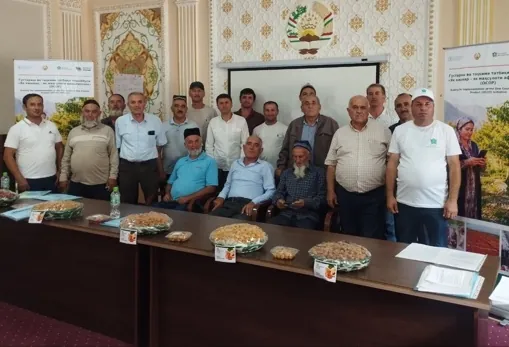
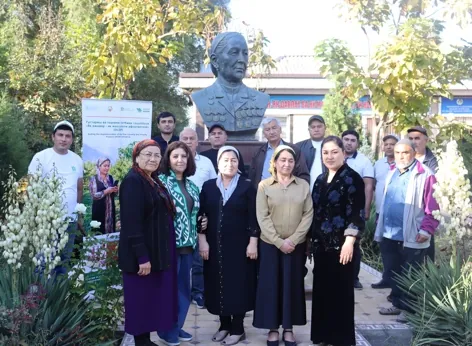
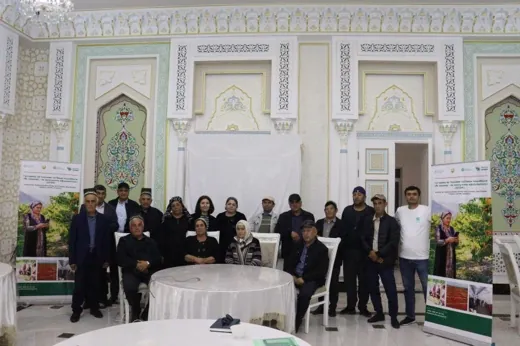
In Tajikistan, apricot growers, farmers, processors, exporters and regional agricultural officials strengthened their knowledge and practical skills through training organized by the Food and Agriculture Organization of the United Nations (FAO) in collaboration with the Ministry of Agriculture of the Republic of Tajikistan. As part of the One Country One Priority Product (OCOP) initiative, training courses were organized in the Gorno-Badakhshan Autonomous Region and Sughd Region, bringing together 75 participants.
The training programme went beyond orchard management, connecting production practices with the harvest handling, processing and marketing requirements that ultimately shape product quality. Adapted to the diverse soil and climatic conditions of Gorno-Badakhshan and the Zarafshan and Fergana valleys, the sessions also drew on local orchardists’ knowledge and experience, making the training directly relevant to the production challenges they face.
Building skills for more resilient orchards
A key focus of the training was helping farmers protect orchards from late-winter and early-spring cold spells and frosts, which can significantly affect production. Participants explored weather monitoring and timely preventive measures, as well as the use of late-flowering, frost-tolerant varieties. The training programme also covered the selection of rootstocks suited to soil and water conditions, market-oriented variety selection and establishing modern orchards using quality planting material.
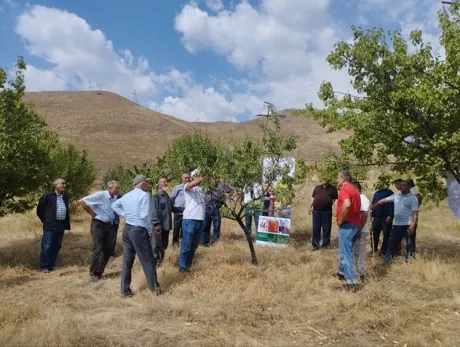
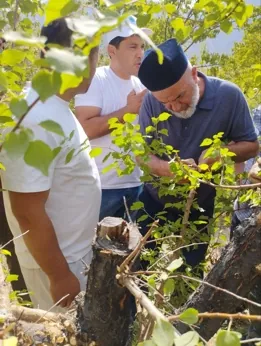
Integrated pest management sessions focused on helping participants identify and respond to apricot pests and diseases at an early stage. Through practical demonstrations, participants explored sanitary pruning, the removal of infected plant material and other agronomic and biological protection methods. They also learned how to prepare and apply Bordeaux mixture and lime-sulphur solution safely and effectively, with attention to appropriate application timing and safety precautions.
With water availability an important consideration for orchard production, the training introduced drip irrigation and fertigation, which allows water-soluble fertilizers to be delivered through irrigation systems. Participants learned how to align irrigation schedules and application rates with trees’ needs, helping to use limited water resources more efficiently.
Protecting quality after harvest
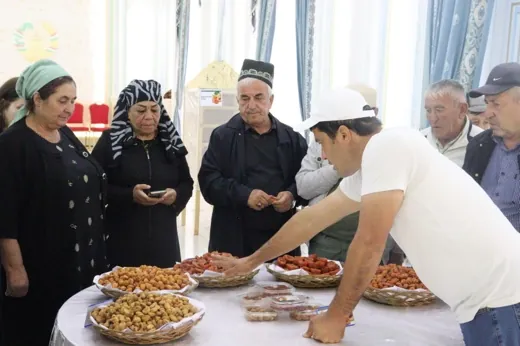
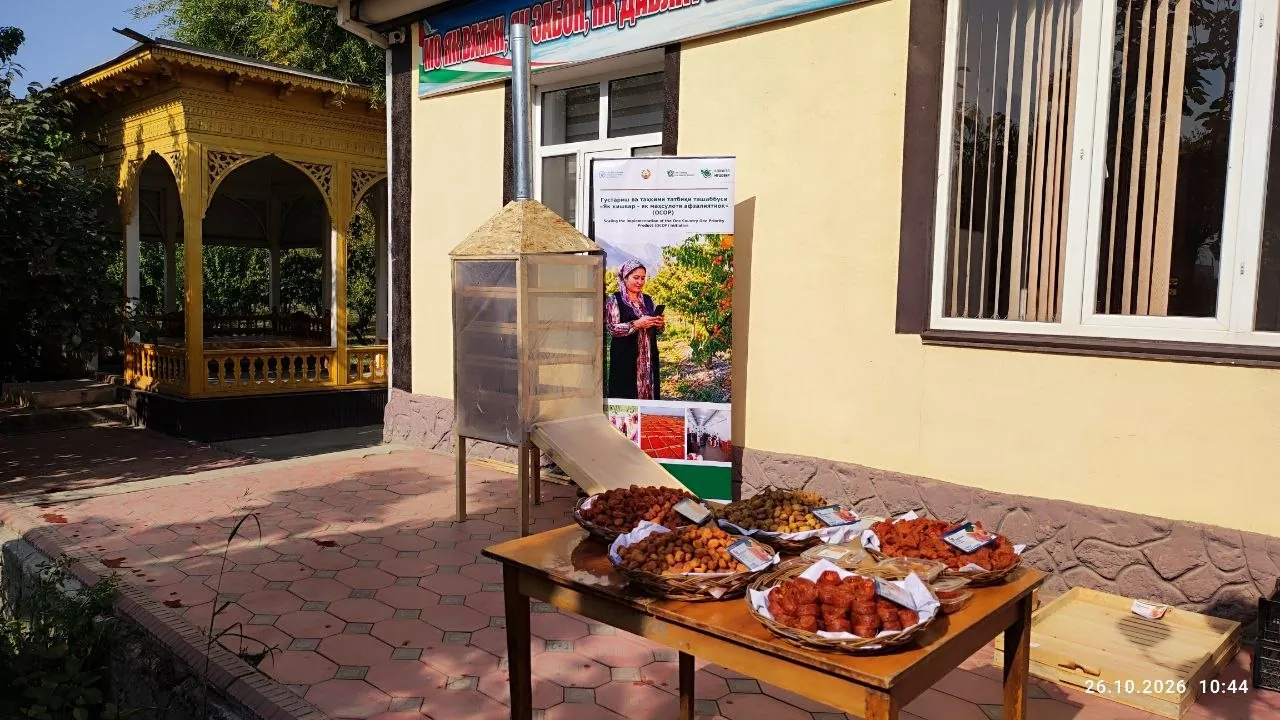
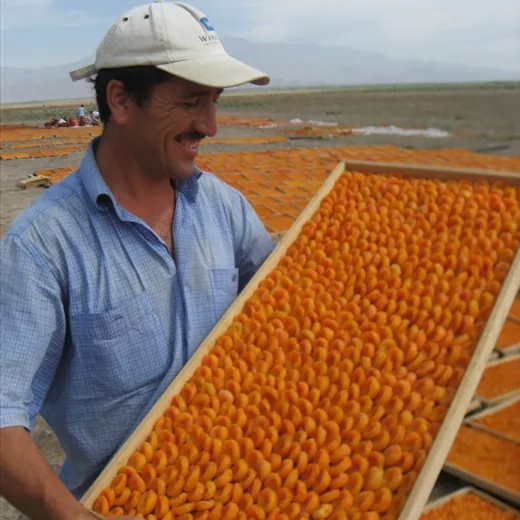
Post-harvest sessions linked harvesting decisions with the quality requirements of fresh and dried apricot markets. Participants learned how to determine appropriate harvest maturity, prepare fruit for drying, apply traditional and equipment-based drying methods, and meet quality requirements for finished products. The training also covered sorting, grading, packaging and storage together with hygiene in processing facilities, equipment sanitation and food safety practices.
“The interactive teaching approach encouraged everyone to participate actively. I was especially pleased to see the strong interest and engagement of the participants throughout the sessions,” said Munira Otambekova, FAO National Consultant.
Turning learning into practice
Beyond strengthened practical knowledge and professional skills, the training created opportunities for participants from different regions to exchange experiences and build stronger connections among producers, processors and exporters. These relationships can support closer coordination across the apricot value chain, from production to market.
To translate learning into practice, participants were encouraged to develop seasonal orchard management plans, regularly monitor weather and pest risks, select varieties and rootstocks suited to local conditions, and improve irrigation and post-harvest practices. The training sessions also underscored the need for a long-term strategy to strengthen apricot production, particularly through reliable access to quality planting material.
As a priority product for Tajikistan under OCOP, apricot is an important source of rural livelihoods, employment and income. By connecting improved production practices with product quality, food safety and market requirements, the training contributes to efforts to build a more resilient and competitive apricot value chain. Its longer-term impact on yields, losses and producer incomes will depend on how these practices are applied and how results are monitored in the coming seasons.